

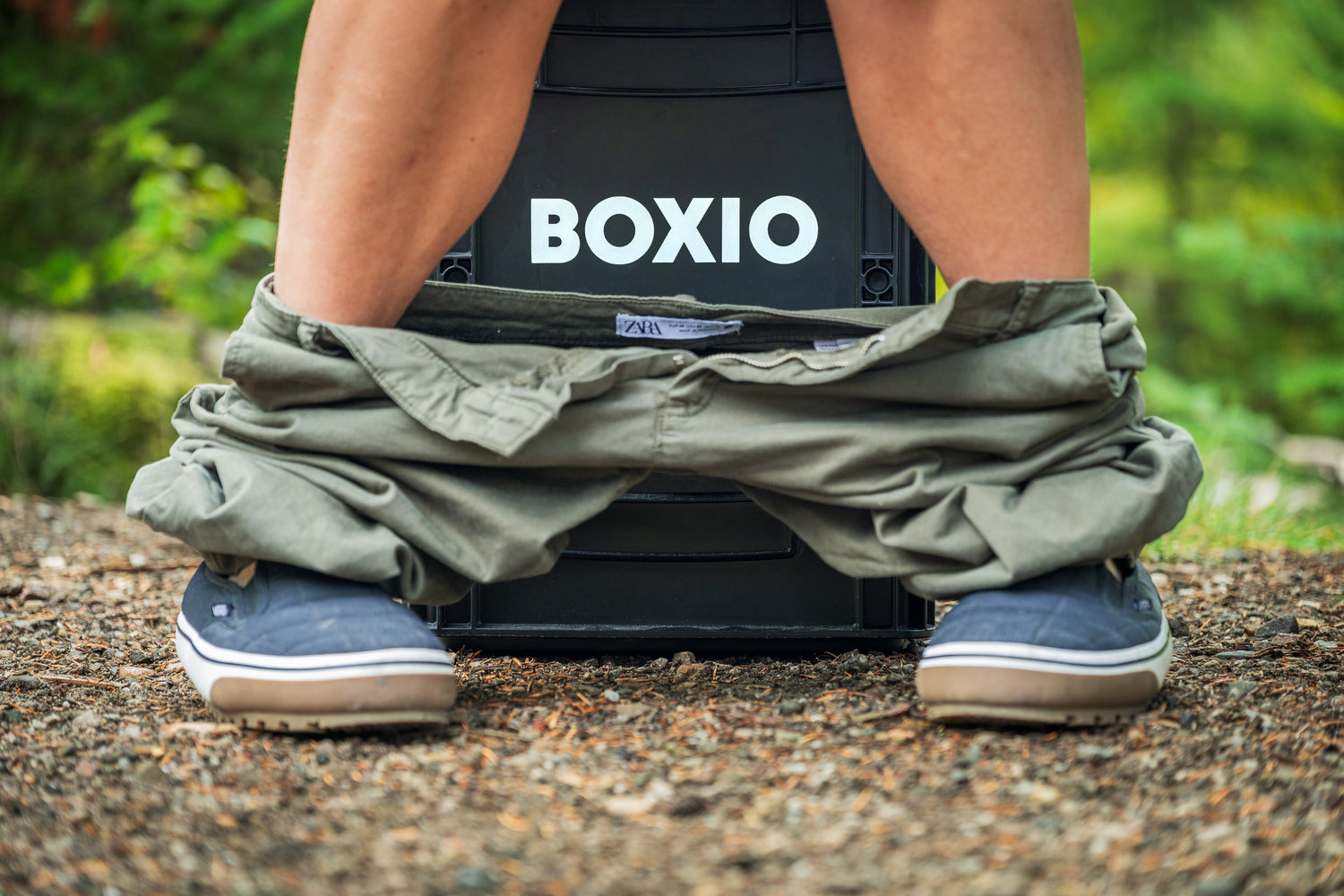

A composting toilet is most pleasant when it's clean – and that doesn't have to be a big deal. With a few simple routines, the right products, and proper management of urine, solids, and moisture, your toilet will stay fresh and ready for use for a long time.
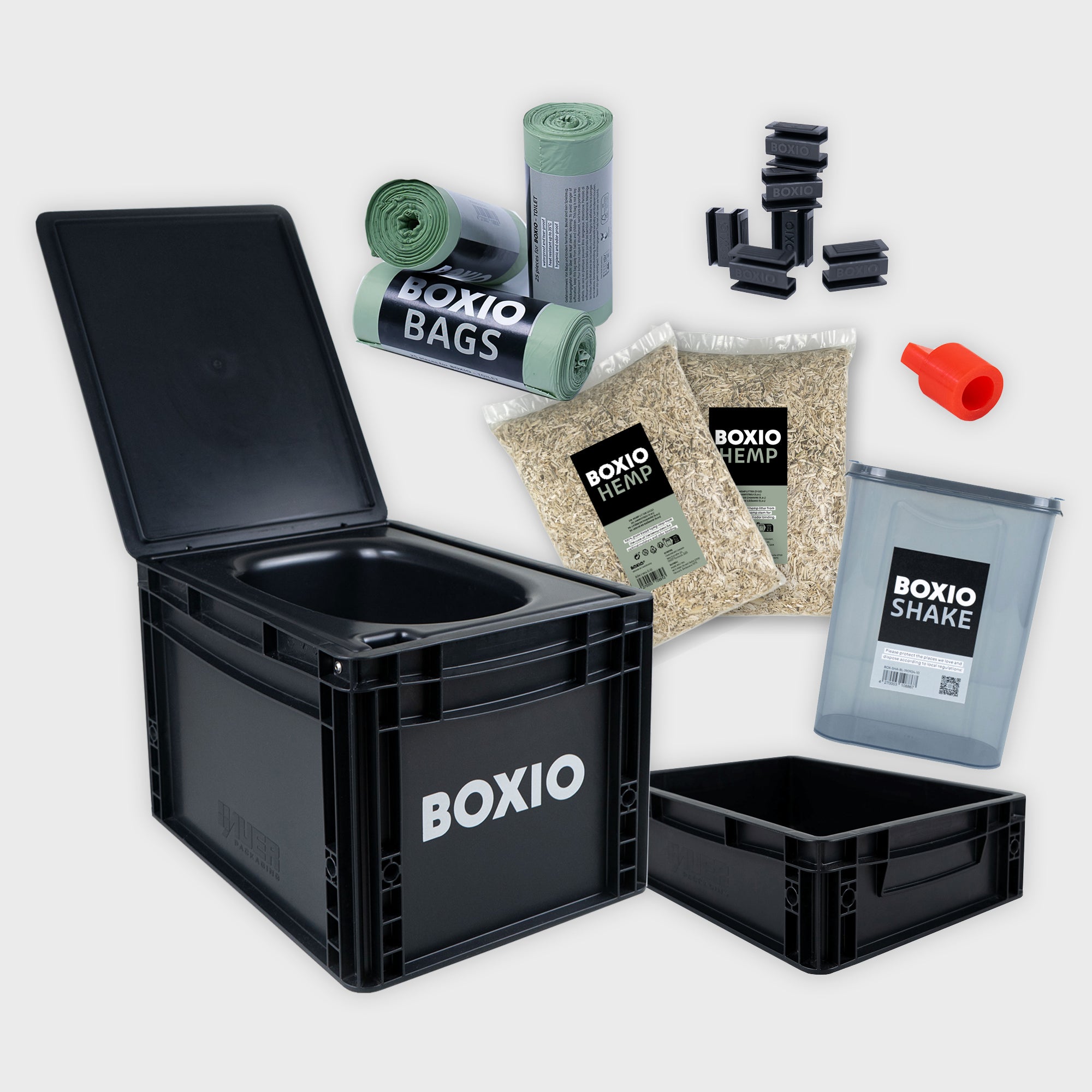
BOXIO TOILET MAX+ | Separating toilet complete set
Cleaning Routines & Intervals
The most important lever for hygiene: short, regular mini-routines, instead of a "major operation" every few weeks.

Daily / As needed "2-Minute Routine"
-
Wipe away visible splashes quickly – ideally right after use.
-
Keep the lid closed when the toilet is not in use.
-
Empty the urine container in time, before it overflows – this automatically reduces odors.
This usually takes less than two minutes and already ensures that nothing "goes bad."
Weekly Cleaning (depending on use)
Depending on how many people are traveling, a more thorough cleaning is worthwhile approximately once a week:
-
Wipe the seat, lid, and smooth surfaces with a mild cleaner.
-
Wipe away any moisture spots with a cloth.
-
Briefly check the seals: are they still properly seated, are they clean?
This sounds like more than it is – it often takes only a few minutes if you're already tidying up your camper.
Disinfection – how often is sensible?
A composting toilet doesn't need to be constantly "clinically sterile," but:
-
Depending on use, you can perform a light disinfection round every few weeks or after longer trips.
-
Important: use material-friendly, gentle products (no aggressive chlorine, no solvents).
This keeps the system hygienic without unnecessarily stressing the surfaces.
Handling the Urine Container
The urine container is the most sensitive part when it comes to odor – but with a few tricks, it remains easy to handle.
-
Never fill it to the brim: It's better to empty it a little earlier, without stress.
-
Rinse briefly after emptying – lukewarm water is often enough.
-
Don't put it back into the box dripping wet:
If the outside of the container is still wet, the moisture will end up in the box and can create a damp, warm climate inside. Better: dry it briefly or let it air dry before putting it back into the composting toilet.
Even inside the container, residual moisture can play a role:
If fresh urine meets a little residual water during the next use, the odor can develop more strongly – but this does not mean that the container is "broken" or continuously smelly, but only that odoriferous substances dissolve more easily.
Tip for deposits:
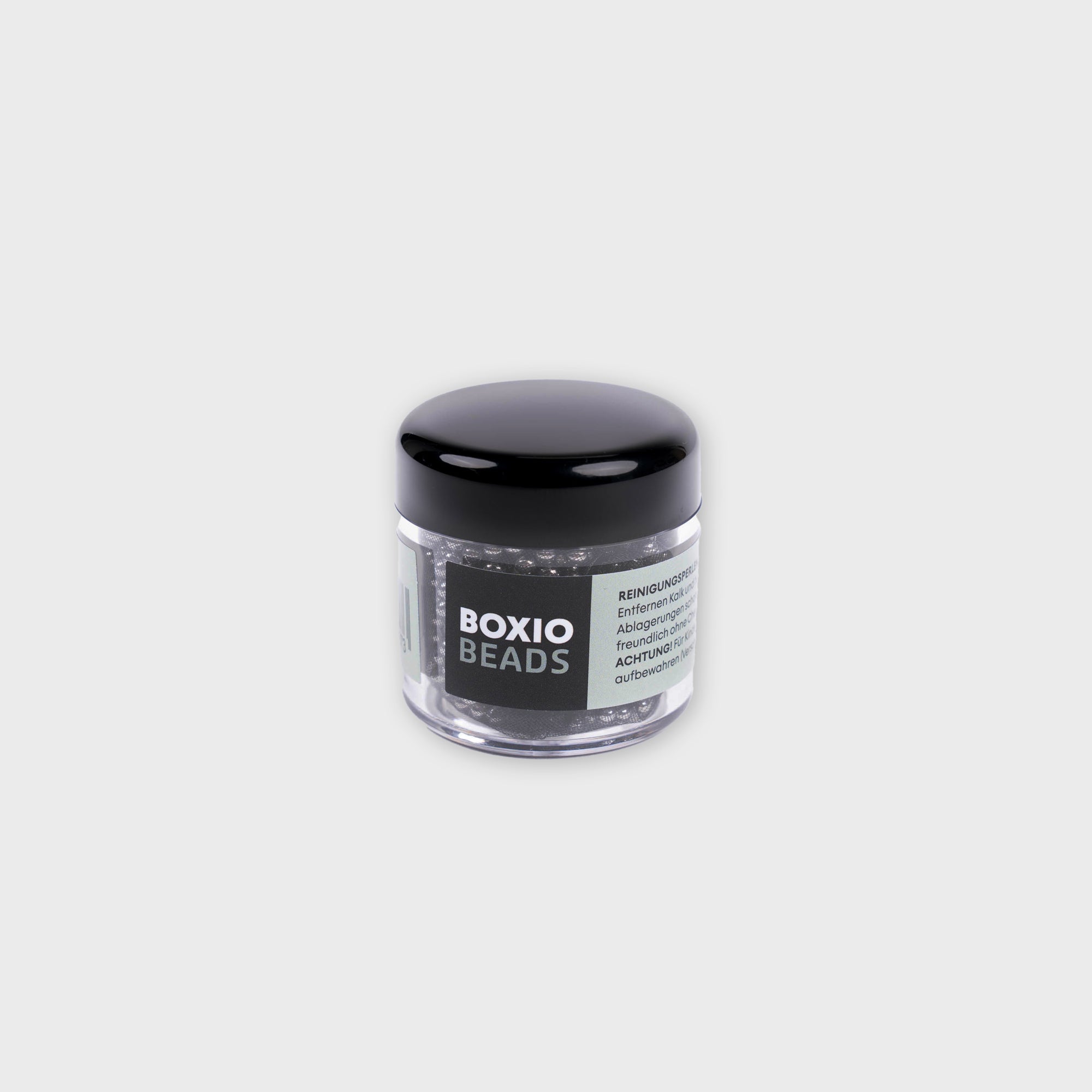
Over time, deposits can form. Cleaning beads (e.g., BOXIO BEADS) can help:
-
Fill the container with water and the beads,
-
shake vigorously or swirl around,
-
then rinse everything thoroughly.
This mechanically removes many coatings – quick and without aggressive chemicals.
BOXIO - BEADS | Stainless steel cleaning beads
Gentle, Environmentally Friendly Products
You don't need hardcore cleaners from a chemical lab for composting toilets. On the contrary: gentle, environmentally friendly products are often the better choice – especially if you spend a lot of time outdoors.
-
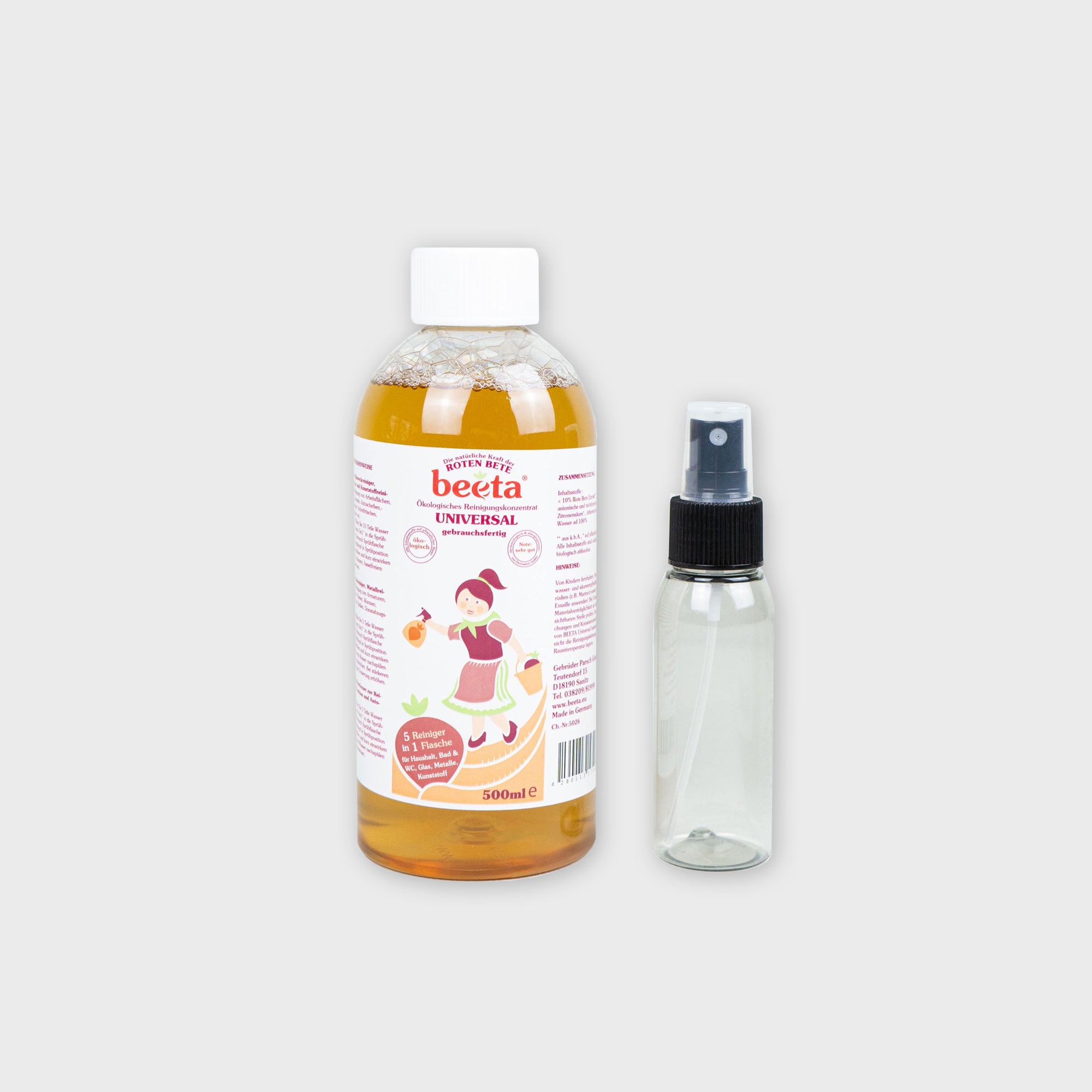
Opt for biodegradable cleaners, such as BOXIO CLEAN.
-
A few sprays on the surfaces, wipe with a cloth – done.
-
Soft sponges or microfiber cloths protect surfaces and seals.
Advantages:
-
good for the environment,
-
pleasant smell in the vehicle,
-
materials are not unnecessarily attacked.
For the solids box, usually all that's needed is:
-
Change the bag,
-
briefly wipe out the container,
-
let it dry – then there won't be any lingering smell.
BOXIO - CLEAN | Cleaning agents
Materials & Longevity
How durable your composting toilet is depends heavily on the materials and how you handle moisture.
-
Many systems use robust plastic or coated surfaces that are super easy to wipe clean.
-
It becomes more problematic with wooden constructions: wood looks chic and is easy to work with, but it often comes into contact with moisture – especially in vehicles, tiny houses, or garden sheds.
-
Even with good coating, moisture stains, mold traces, or odors can develop over time.
-
Here, particularly consistent care is important: regular drying, ventilation, and keeping an eye on surfaces.
-
If you think: "I don't really have the patience for that," then ready-made solutions are often the more stress-free option – for example, a composting toilet in a Eurobox, which is lightweight, low-maintenance, and designed for everyday moisture.
Small Extra Tip: Smartly Use a Pressure Washer
If you take your van or motorhome to the car wash or use a pressure washer anyway from time to time (especially important after salty highways or sea air), you can combine that with a BOXIO composting toilet:
-
Briefly rinse the Eurobox and smooth parts of the toilet with the pressure washer,
-
then let it dry thoroughly – and the box is clean again.
This saves time, doesn't feel like an "extra task," and extends the lifespan of your setup.
Conclusion:
With a few quick steps, gentle cleaning products, and proper moisture management, your composting toilet will stay fresh long-term – without you having to become a cleaning professional every weekend.


